Vertical platforms have changed not only video formats but also the very logic of animation. TikTok Reels and YouTube Shorts constitute distinct media with their own rules of attention, rhythm, and visual perception. An animation that works perfectly in a three-minute YouTube video can completely fail in the first two seconds of a vertical feed. Therefore, adaptation isn’t a matter of cropping the frame but of reorganizing thinking.
Vertical Frame
The biggest mistake an animator makes is starting horizontally and then “flipping” the result into a vertical format. In vertical video, the center of attention is higher than it appears. The user holds the phone so that the upper third of the screen is in the immediate zone of perception, while the lower third is in the peripheral zone. This directly affects the composition.
Characters in vertical animation are often larger than in traditional formats. The camera is almost always closer than you’re used to. Long shots perform worse because there’s no “air” on the screen: the background and the object compete for attention. Therefore, designers simplify backgrounds, remove small details, and use gradients or flat color fields to prevent the eye from “splitting.”
Vertical animation also enhances the sense of movement from top to bottom. Falling, scrolling, flying, and jumping elements are all perceived more quickly than horizontal movement. Therefore, many vertical animations are based on vertical dynamics, even when the plot does not require them directly.
Pacing
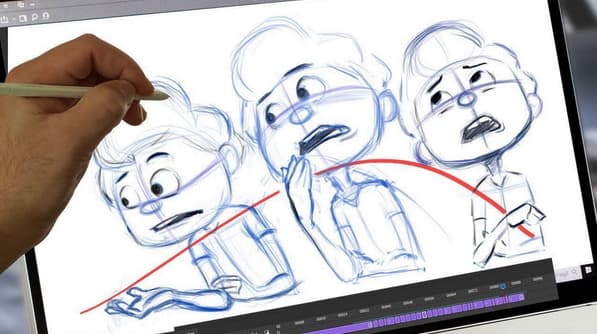
TikTok and Shorts don’t have an “intro.” There’s only the moment when the viewer decides to stay or swipe. For animation, this means a strict rule: the first visual hook must occur within 0.5-1.5 seconds. This changes editing and animation timing. Shots become shorter, and pauses become dangerous. Where you could previously afford a second to “get going,” instant visual clarity is now required. The action begins immediately, and the key idea is shown before it’s explained.
Because of this, animators often work with “loops”: the animation is constructed so that the beginning and end coincide. This increases viewing time because the video appears continuous. The loop ceases to be a gimmick; it becomes a structural element.
Visual Techniques
Vertical platforms encourage visual aggression—but not in a bad way. This isn’t about garish colors, but about clear cues for the eye. Contrast is key. Very light and very dark combinations are often used, as are sharp color accents that synchronize with movement or sound.
Text also changes in animation. Small captions are useless: the user won’t read them carefully. Therefore, captions become short, large, and rhythmically linked to movement. Text is often animated as an object rather than as an explanation.
Another technique is the intentional “incompleteness” of a frame. When an object partially extends beyond the screen, the brain automatically tries to complete the image. This holds attention and creates a sense of dynamism even in a static moment.
Why vertical animation is a separate profession
Working for TikTok and Shorts is a distinct discipline in which the speed of decision-making, an understanding of behavioral patterns, and the ability to prioritize essential over nonessential tasks are crucial. Animators in this environment consider not only movement but also how the video will live in the feed: where the viewer will stop, where they’ll want to rewatch, and where the algorithm will surface the video.
This requires a different mindset—closer to editing and UX than to traditional storytelling. Vertical formats haven’t destroyed animation, but rather expanded it. They’ve forced us to strip away the unnecessary, sped up the language, and made every movement meaningful. And it’s precisely in this constraint that many find a new level of expressiveness.
Production Shortcuts
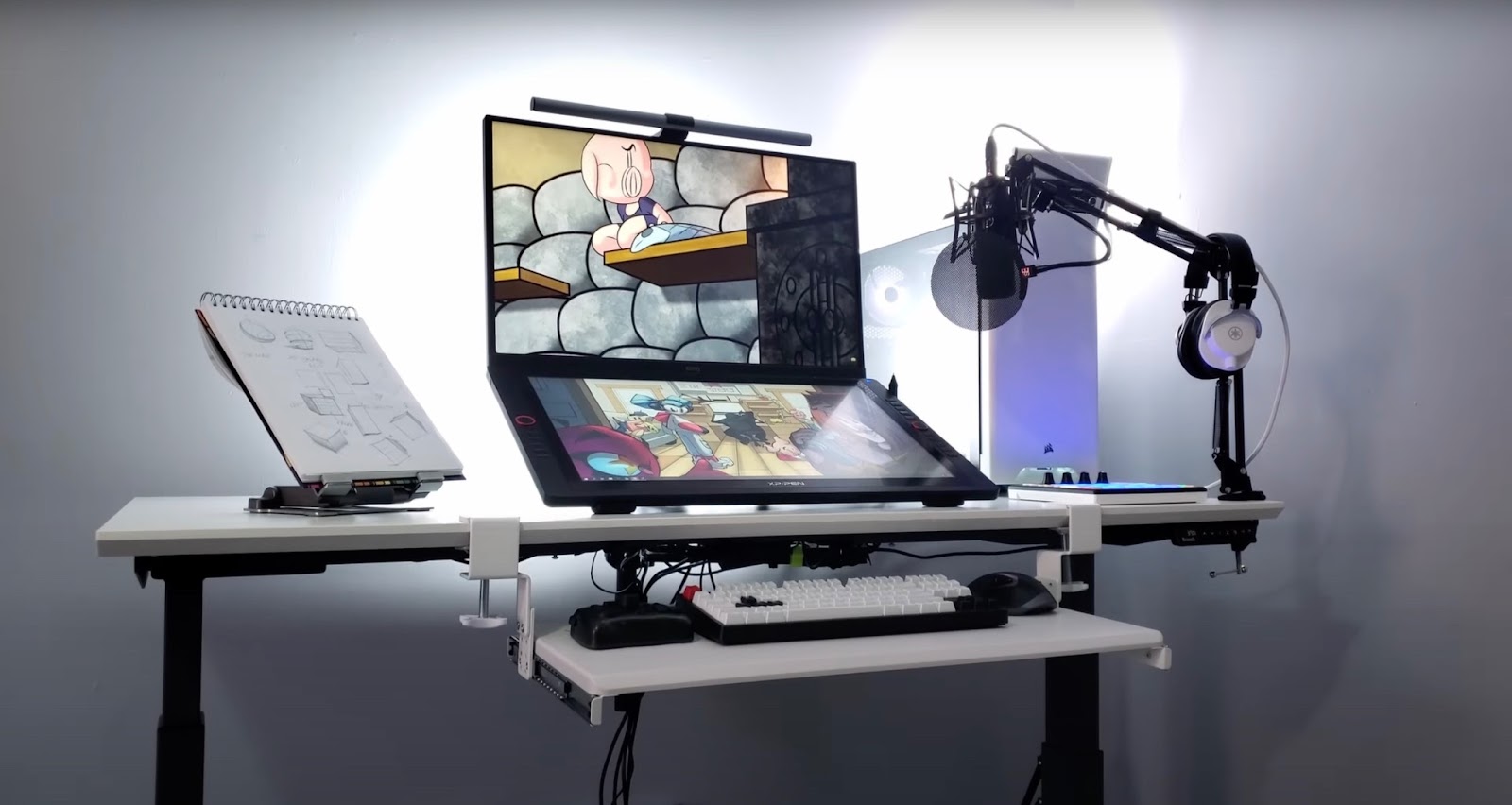
Vertical platforms dictate not only the format but also the pace of work. Producing 10–20 seconds of animation can no longer take a week, so animators are deliberately simplifying their pipelines, preserving visual expressiveness through solutions rather than resources. It’s not about “cheaper,” but “smarter.” In practice, this looks like this:
- Modular scenes and elements. Backgrounds, transitions, basic camera movements, and standard character animations are assembled like a construction kit. This allows for content changes without rebuilding the scene from scratch and maintains a consistent visual language.
- Simplified rigs and limited animation. Instead of complex skeletons, a minimal set of controllers. Movement becomes more graphic but is also easier to read on a small screen and adapts more readily to different videos.
- Elimination of complex lighting and photorealism. Subtle lighting nuances are lost in a mobile feed. Therefore, teams choose flat lighting, crisp shadows, or even a graphic approach—the result looks cleaner and renders faster.
- Templates for text and titles. The text in the vertical animation follows the same rhythms: appearance, emphasis, and disappearance. Ready-made templates save time and allow for faster testing of different wording.
- Work in short cycles instead of linear production. Animation is not created “from start to finish,” but in small, complete blocks of 2-4 seconds. This simplifies edits and facilitates the creation of loops that work well in the feed.
Such shortcuts don’t detract from the animation—they remove all unnecessary elements. As a result, the focus shifts from technical complexity to rhythm, ideas, and visual clarity, which are critical for TikTok Reels and Shorts.